Friday, June 24, 2016

Bunker Rake Placement and Course Etiquette

Bunker Rake Placement

Every year I get the question of where to place the bunker rakes; in the bunker, partly in the bunker, or outside the bunker?  The USGA has no specific rule on bunker rake placement and recommends the committee decide where it wishes the rakes to be placed.  As a result the HFCC G&G committee would like all members to put the rakes on the inside edge of the bunker.

Rakes on the inside edge of a bunker.
The reason for putting the rakes on the inside edge of the bunker is simply a matter of economics, it reduces maintenance costs.  When the mowers do not need to stop the machine and move all the rakes they are more efficient and can finish quicker.  While stopping and moving a rake may not seem like much, stopping for nearly 70 bunkers and doing this through a season adds up to thousands of dollars in labor costs.

Course Etiquette

It is at this time of year that I like to review some basic rules for the golf course.  These rules help to keep our beautiful course in great shape and allow your fellow golfers to experience the course at its best.

Cart Path Only Rule – During times of wet weather or severe turf stress, carts must stay on the cart path.  This is both for the course’s protection and yours.  Remember, all par 3’s are cart path only.

90° Rule – After hitting each shot, travel down the cart path until even with your ball and travel at a right angle to your ball, hit your shot and travel back to the path using a 90° line back to the path.  Signs at the white tee markers will indicate whether the hole is 90° or Cart Path Only.  It is possible that some holes will be 90° and others Cart Path Only.  Please pay attention to the signage.

Wet Area Signs – Please keep carts away from wet area signs as these designate areas on the fairway that are too wet to accommodate cart traffic.

Divots in Fairways and Roughs – Please replace all divots in fairways and roughs, then, press firmly with your foot.  These can also be topdressed with the sand provided in the carts.

Divots on Tees – Please fill all divots with the sand provided at the tee as these have seed in them.  Do not use the sand in the boxes at the tees to fill your sand bottles, as we do not want the seed in the boxes to contaminate the other grasses on the course.  However, you can use your sand bottles to fix divots on the tees.


Ball Marks on Greens – Please repair your ball marks on the greens.  If you cannot find yours, please repair any ball mark that you see.  The correct method for repairing a ball mark is to place your repair tool on the outside edge of the ball mark and pull the edge inward.  Do this all around the ball mark and then flatten lightly with your putter. 

Monday, June 6, 2016

The Ponds Are Repaired

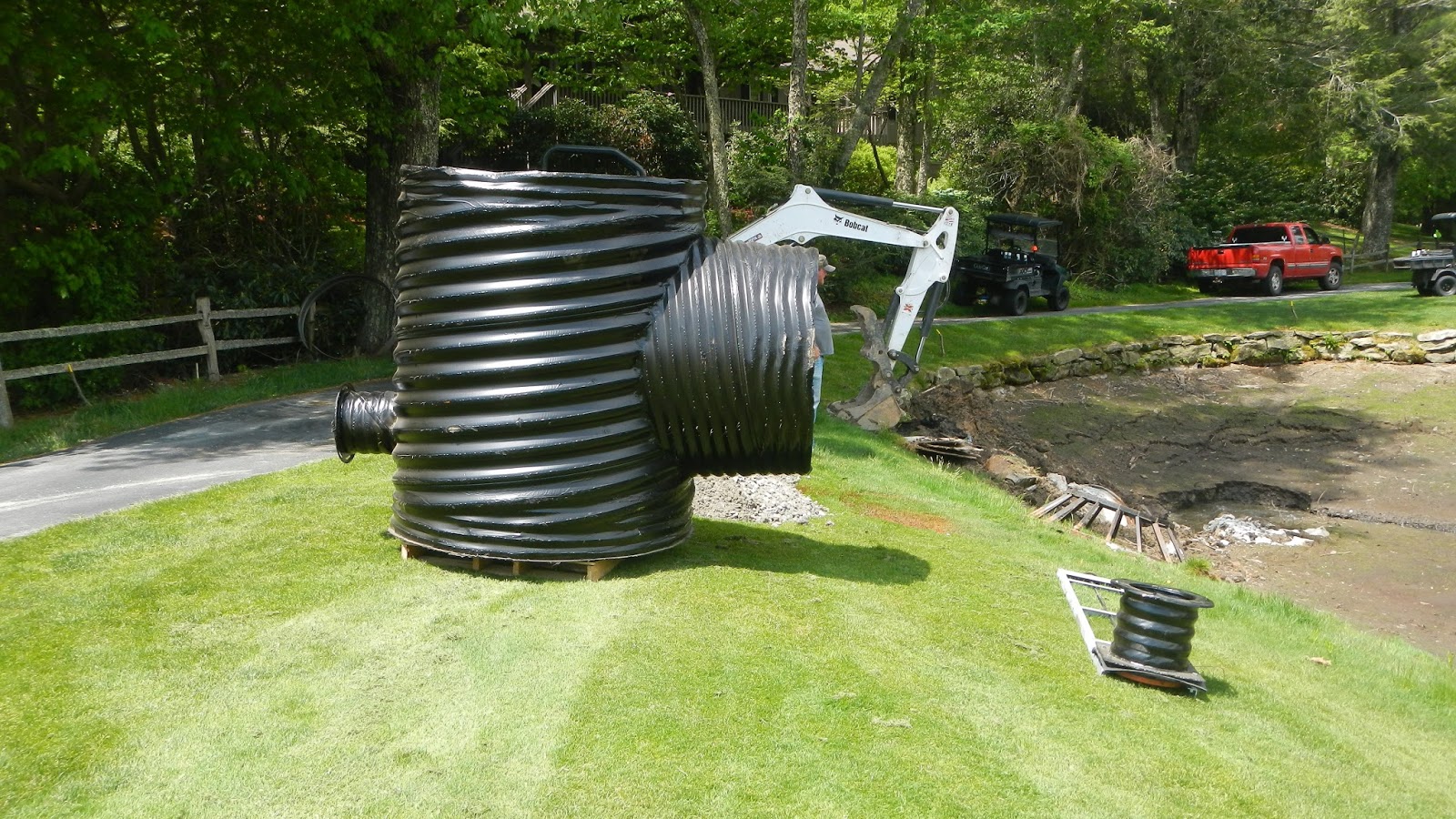
As everyone has seen, the lake on #8/#9 was drained during the better part of May to replace a rusted “overflow” structure.  I am happy to report that the new structure was successfully installed a few weeks ago and the lake is now full.  In addition to replacing the "overflow" structure, we repaired the rock wall around #9 tee that collapsed while the lake was down and installed 5 pallets of sod to the area of disturbance.
#1  After discovering a problem with the "overflow" structure, the lake was lowered.
#2  A concrete block had to be removed before the "overflow" structure could be taken out.
#3  After removing the "overflow" structure, it was clear why the lake was leaking.
#4  A coffer dam had to be installed so that workers could work on installation of the new "overflow" structure.
#5  The existing drain pipe had to be cleaned before being joined with the "overflow" structure.
#6  The "overflow" structure consists of a stand pipe, drain pipe, and drain valve all covered in tar.
#7  The structure was carefully fitted and lowered into place.
#8  Concrete was poured around the coupler to both seal the joint and to keep the structure from floating.
#9  The "overflow" structure as seen from the surface.  A trash screen has yet to be installed.
#10  Success.
Next we have the issue of the pond on #1 being drained.  Again, this was a problem with the "overflow" pipe.  However, this was a case of poor installation from a contractor for the HOA who hastily installed the pipe while replacing culverts throughout the property.  The good news is that they recognized the issue and have repaired the pipe.  Our staff added several yards of concrete to make sure the pipe stays in place.  We have just recently filled the pond back up and everything is back to normal.
#1 pond in all its glory.
While none of us likes to have major problems happen as the season starts, sometimes its just out of our control.  We just take a moment and develop a solid plan to correct the problem and move on. While the repairs to the ponds took a little longer than anticipated, the repairs are solid and good for many more years which in the end is better than a quick fix.

Monday, May 2, 2016

The Bees Knees


I've always viewed my career as a Golf Course Superintendent as; part grower of grass, part artist, and part environmental steward. At Highlands Falls, the environment is just as much a part of the golf course as are the greens. It has become a part of our daily operation to look upon and appreciate the mountainsides of blooming rhododendron and mountain laurel, a momma bear and her cubs, and hundreds of honey bees flying about the many gardens throughout the property. It is easy to recognize the “big players” as it pertains to the environment, but it’s the little ones, like the bees, that help invigorate the landscape with an abundance of color throughout the season.

You may or may not know that honey bee populations are on the decline throughout the U.S. due to what is being called 'Colony Collapse'. It is here that we have a unique opportunity to take advantage of the landscape on the golf course to preserve and improve honey bee and other pollinator populations, while enhancing the visual appearance of the course.

New this year, on hole #14 across the river, we have set up several beehives. The goal is to improve the landscape throughout the Club by encouraging the pollinators. Additionally, the hives are a great barometer of the environment and of our management practices. The total cost and time investment is very small on our part as the bees do most of the work. It is my hope, in the near future, as the bees begin to thrive, that we will be able to sell the honey from our hives here at the Club.

While managing honey bees at HFCC is new, it is a growing trend within the golf industry. Many high end clubs have taken on this practice as a means of demonstrating to the general public that golf courses can coexist with the environment in a very productive manner.

In future newsletter articles, I will update you on how our new endeavor is progressing and share with you some unique facts and pictures about our honey bees. Last, and most importantly, it is necessary to house the apiary (a collection of beehives) behind an electrified fence in order to keep the bears away. We ask everyone to please keep clear of this area for their own safety.  

Monday, April 11, 2016

Community Service

As good stewards of the community, we try to perform some type of community service every year. Sometimes we do large projects and sometimes smaller ones.  Through the years we have been asked to build dog houses, bird boxes, plant trees, and clear lots.  In the end, all these projects are important to someone and they improve the community as a whole.

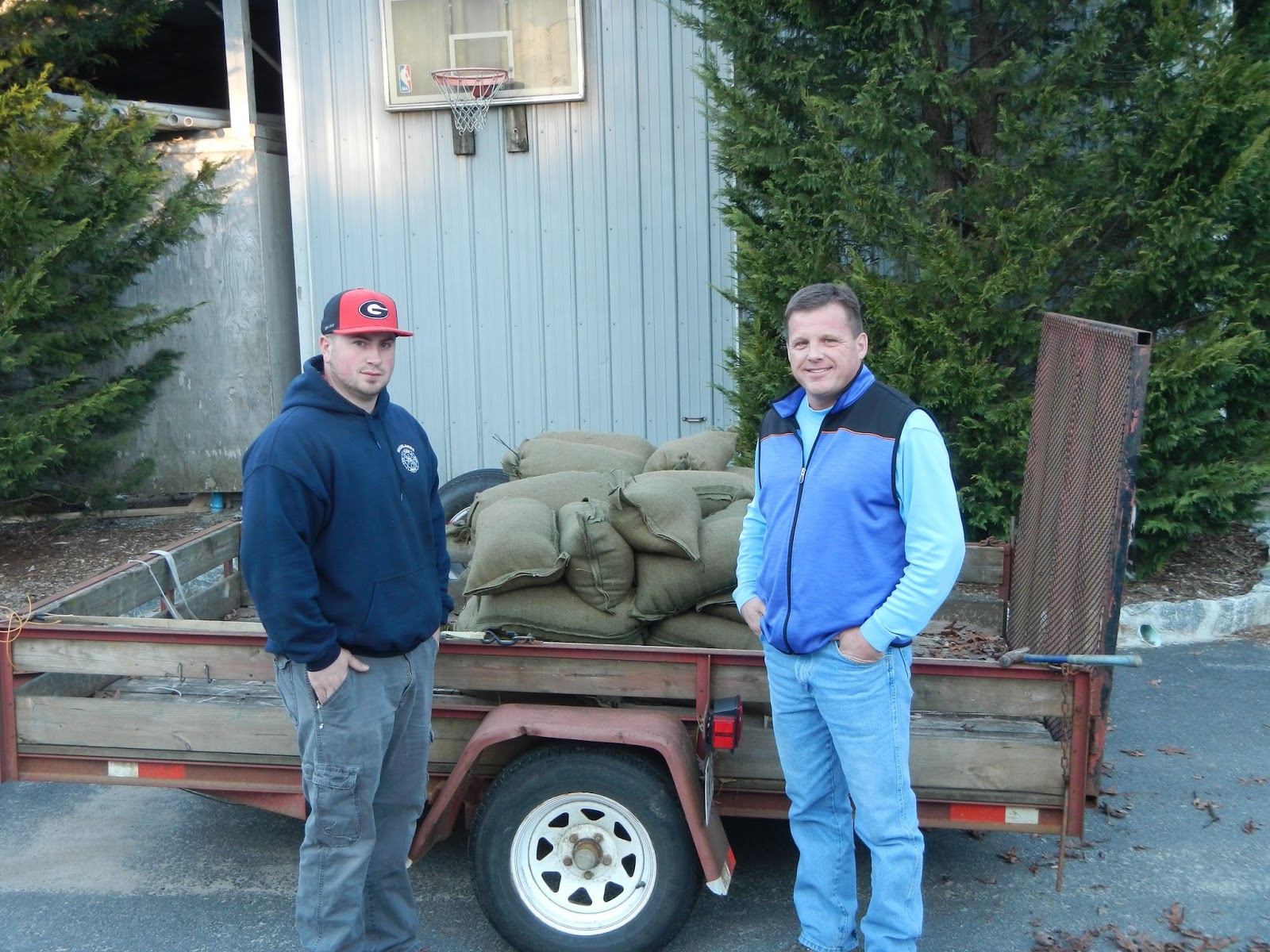
Last week a former employee came to me and asked if we could help him out.  Thomas James who is an MP with the 210th Military Police Company of Franklin in the Army National Guard, needed sand bags filled for training purposes.  Unfortunately, his guard unit has nowhere to store or any need for sand and he was hoping that we could help.  Fortunately for him, sand is something we have a lot of.
Filling sand bags.
Stacking sand bags onto a pallet.
Thomas brought over 40 sand bags and our crew filled them in short order.  The sand bags are used for rifle qualifications and other training purposes.  Unbeknownst to me, the bags make a great rifle rest and target backdrop.
Thomas James and myself.
While this was a small project on our part, it was a huge benefit to the 210th and I feel honored that HFCC was asked to help out our local men and women in the armed forces.

Friday, March 18, 2016

CPR/AED & First Aid Training

In the United States sudden cardiac arrest claims about 340,000 lives each year – or around 930 every day according to the American Heart Association.  Sudden cardiac arrest is the leading cause of death on the golf course.  This is true for many reasons including the average age of golfers is typically higher than other sports. 
CPR/AED & First Aid training requires some classwork.

Onifer demonstrating the Heimlich maneuver.
Because of the likely chance that someone will experience a cardiac emergency on the golf course, all of the management staff at the golf course maintenance department have completed the certification requirements for CPR/AED for Professional Rescuers with First Aid.  What this training means is that each of us has the knowledge and skills necessary to give CPR and/or basic first aid care in an emergency situation to help sustain life and minimize the consequences of injury or sudden illness until medical help arrives.
Chris and Aaron learning about chest compressions.
CPR and AED training consist of two different life-saving methods.  CPR enables you to act quickly in the event of a cardiac arrest.  CPR involves chest compressions and rescue breathing to sustain a victim until help arrives. An AED is an automated external defibrillator: This device sends an electric shock to a victim to restore a heartbeat. If a victim’s heart stops beating, seconds are precious. Optimally, CPR or AED use should begin within three to five minutes of the person’s collapse. Emergency personnel won’t make it to the victim within this time, which is why we feel it is necessary for all of us to be trained.
Chris performing rescue breathing while Aaron looks on.

Fred performing chest compressions.
We are very fortunate that HFCC Fitness Director, Onifer Wilmoth is a certified American Red Cross CPR/AED, First Aid Instructor as he held our certification class at the fitness center.  Those of us in the Golf Course Maintenance Department that completed this training are; Fred Gehrisch - Superintendent, Josh Cantrell - Assistant Supt., Chris Cowan - Assistant Supt., and Aaron Brown - Equipment Manager.

Lastly, it is important that all members be aware where the portable AED's are located throughout the club.  The club owns five and they are located at the clubhouse, fitness center, swim/tennis facility, croquet pavilion, and at golf course maintenance.
Certificate of completion.

Friday, March 11, 2016

Renovated Equipment - Greens Rollers

As I have stated in the past, during the winter months when we cannot work outside, we work on preparing for the next season.  One of the things we do is refurbish equipment.  So long as parts remain available, refurbishing equipment is a very cost effective method for preserving capital and helping the operation run more efficiently.

Removing rust and old paint
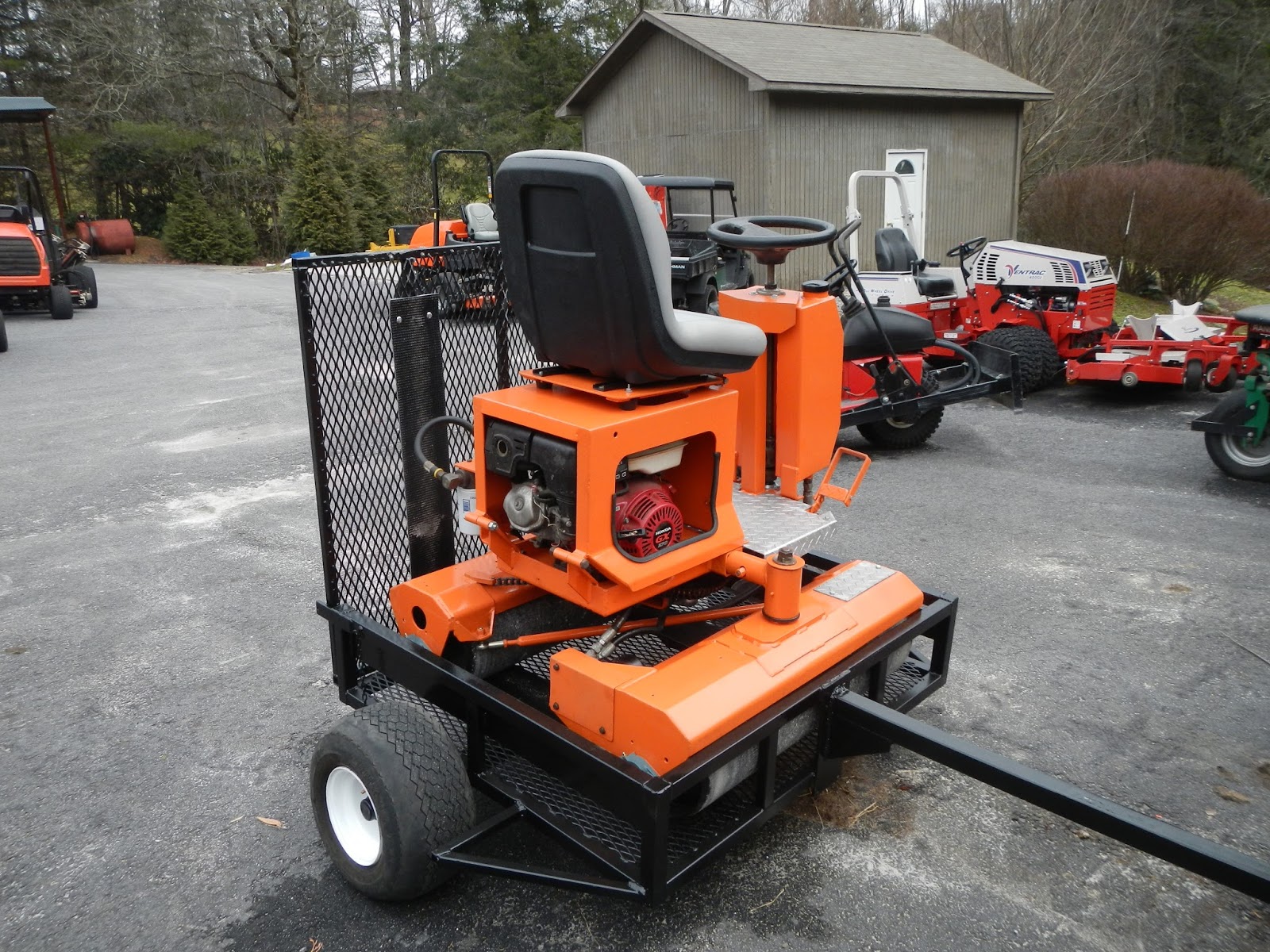
HFCC owns three Salsco greens rollers that are 20 years or older.  Fortunately for us, parts are still very much available and the basic design of the machine has not changed.  What this means for us is that a new machine would not necessarily provide any real benefit over refurbishing the old units.  While the new machines are a bit faster, the old ones are as fast as we need them to be, especially with our small greens and sloping green surrounds.
Welding a new section to the ramp.
Each machine was completely disassembled and stripped of paint.  Some welding and fabrication was needed as two machines had cracked frames and all of the rollers either needed replaced or repaired.  The rollers all received new bearings, chains, sprockets, hoses, seats, and where finished off with a new coat of automotive paint.
Painted parts awaiting assembly.
Assembling the frame.
Installing the engine and hydraulics
In addition to refurbishing the rollers, the trailers that transport the rollers where refurbished.  This was a major undertaking as the trailers had cracked frames and short ramps.  Approximately half of each trailer was replaced by our staff as they fabricated new parts and welded them in place.  Each trailer was finished off with a new coat of paint and new rubber tracks.
Grinding a new longer trailer ramp.
Old trailer disassembled.
Finished trailer with longer ramp and rubber tracks.
The complete cost of refurbishing the rollers and trailers was approximately $7000.  The cost of three new rollers would have cost the club over $50,000, so the refurbishment is a very cost effective solution.  The refurbished rollers will last the club for well over five years or until parts are no longer available.
Finished rollers on their trailers.
Finished roller.
Finished roller.
Three finished rollers ready for the season.
 

Friday, March 4, 2016

#12 Drainage Update 3/4/16

With this being one of the wettest winters in memory, our winter drainage projects have gone slower than hoped.  While we were able to replace the large culverts under the fairway on #12 in November, installing the Turfdrain has not gone as planned.  Of about 25 lines of drainage that need to be installed, only about 8 have been installed as of today.  While we are hoping for improved weather, we are currently being delayed by about 4 inches of snow.
Trenching 4 feet deep.

#12 is a wet fairway that is in desperate need of good drainage.

In addition to poor weather, an excessive amount of rock has slowed the drainage project.  While we expect some rock (it is the mountains), we are hitting rock in unfortunate locations causing us to either dig a new trench or jack hammer through it. 
Plastic mats are used to haul the trench material away.

Even though the trencher removes most of the dirt, hand work is still necessary.

Even though we are behind schedule, I do believe there is enough time for us to make a huge impact on the quality of the 12th fairway.